
AI Prescription Refill
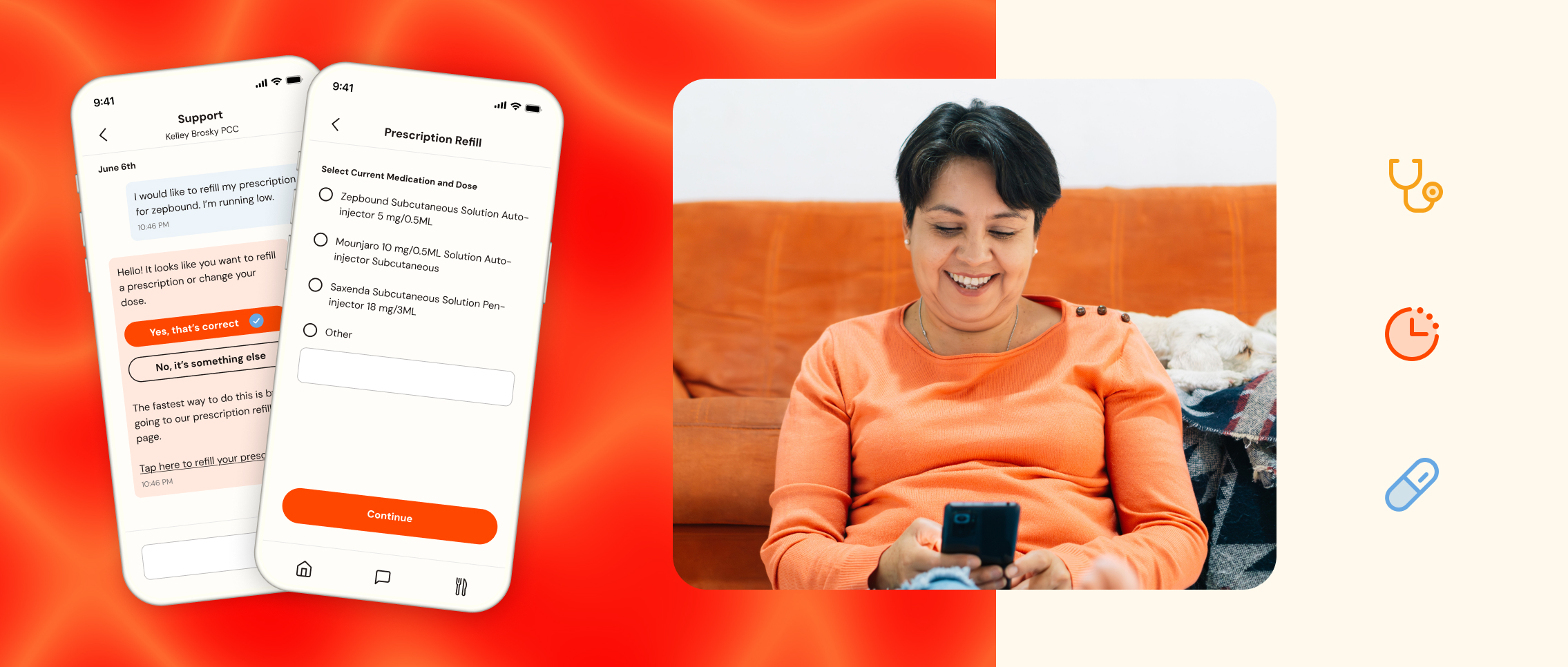
At Form Health, we provide virtual obesity care through virtual patient visits and messaging through our app. Our providers, dietitians and care coordinators were spending too much valuable time sorting, routing, and manually responding to a high volume of patient messages through our chat system. To reduce this volume, we focused on optimizing one of the most common requests in our chat: prescription refills.
The prescription refill process is time consuming for clinicians as they have to gather data from the patients before they can refill the prescription, which usually involves a back and forth conversation. Our goal was to optimize this process by triggering an AI response whenever prescription refills was mentioned in chat. By doing this, our clinicians were able to deliver faster support, and allow our team members to focus on building meaningful patient relationships that drive better health outcomes rather than focusing on repetitive administrative workflows.
First, we needed to map out the users journey through this new process. We needed to show how inbound patient messages will move through our system with this added step. Refill specific messages are identified and processed through a workflow that streamlines medication selection and task creation. Non-refill inquiries are routed directly to clinicians, ensuring patients consistently receive timely, accurate, and personalized responses.

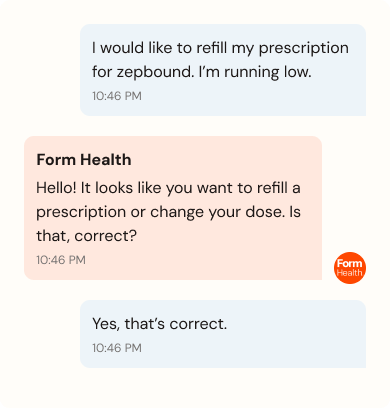
First we had to model what the interaction would look like between an AI agent and our users, which we had not done before. This involved an evaluation of whether a chat-centric approach or a structured, clickable interface would best serve our goals.
Option A
Option B
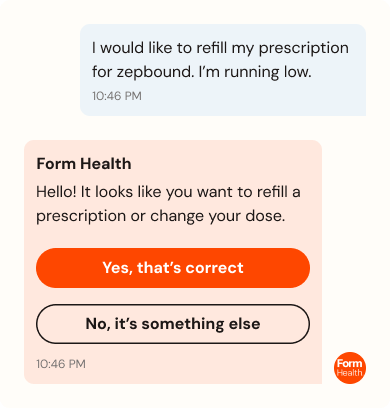
After going through some discussion between the product and engineering team, we decided to go with option B because it reduced any possibility that the AI would be confused about the answer, plus it's lets clicks for the user. Given the binary nature of the prompt, incorporating 'Yes/No' buttons buttons seemed like the solution with the least amount of friction possible for the user.
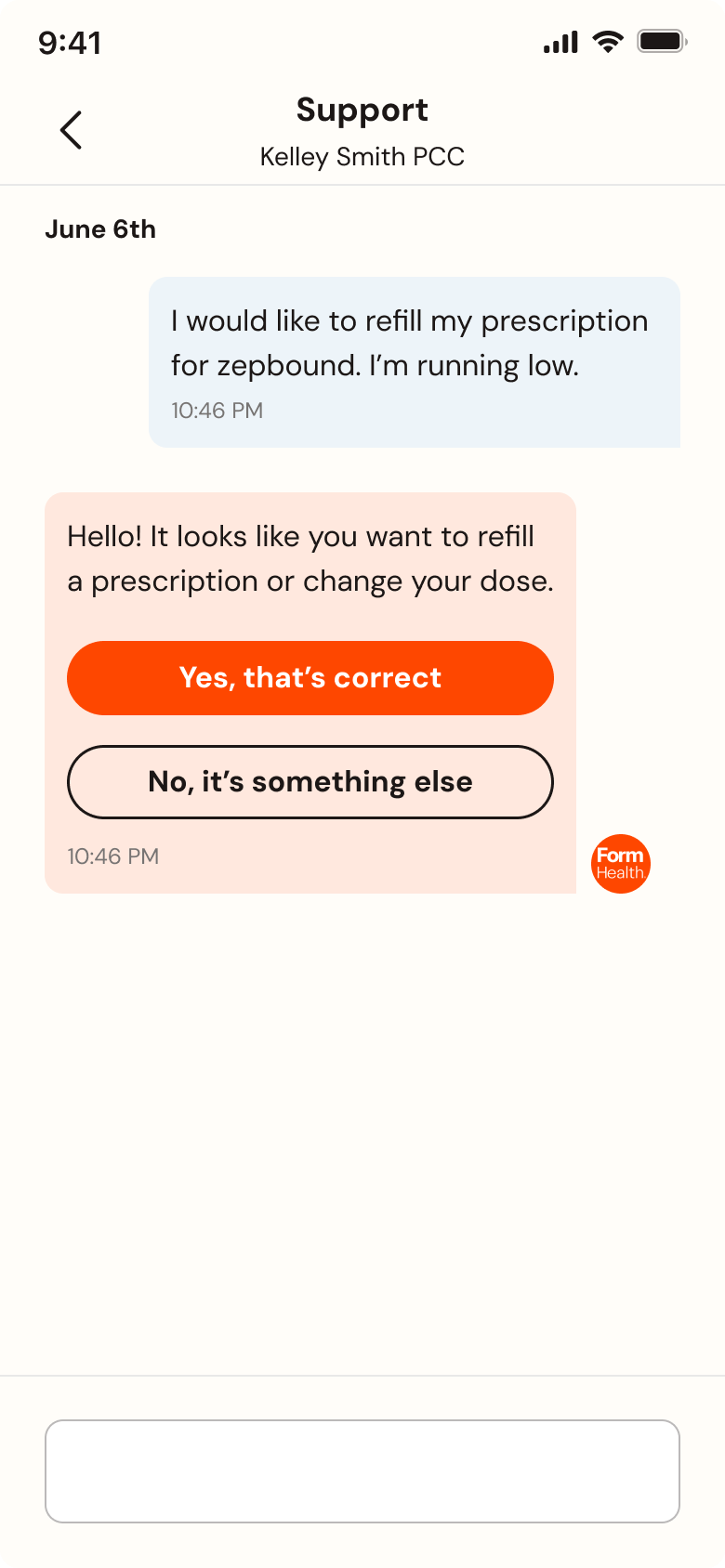
Once we designed that element, the rest of the screens we're able to be designed from existing elements in our app design system. Now that we had a path forward we had to determine what the happy path and unhappy path looked like.
Happy Path
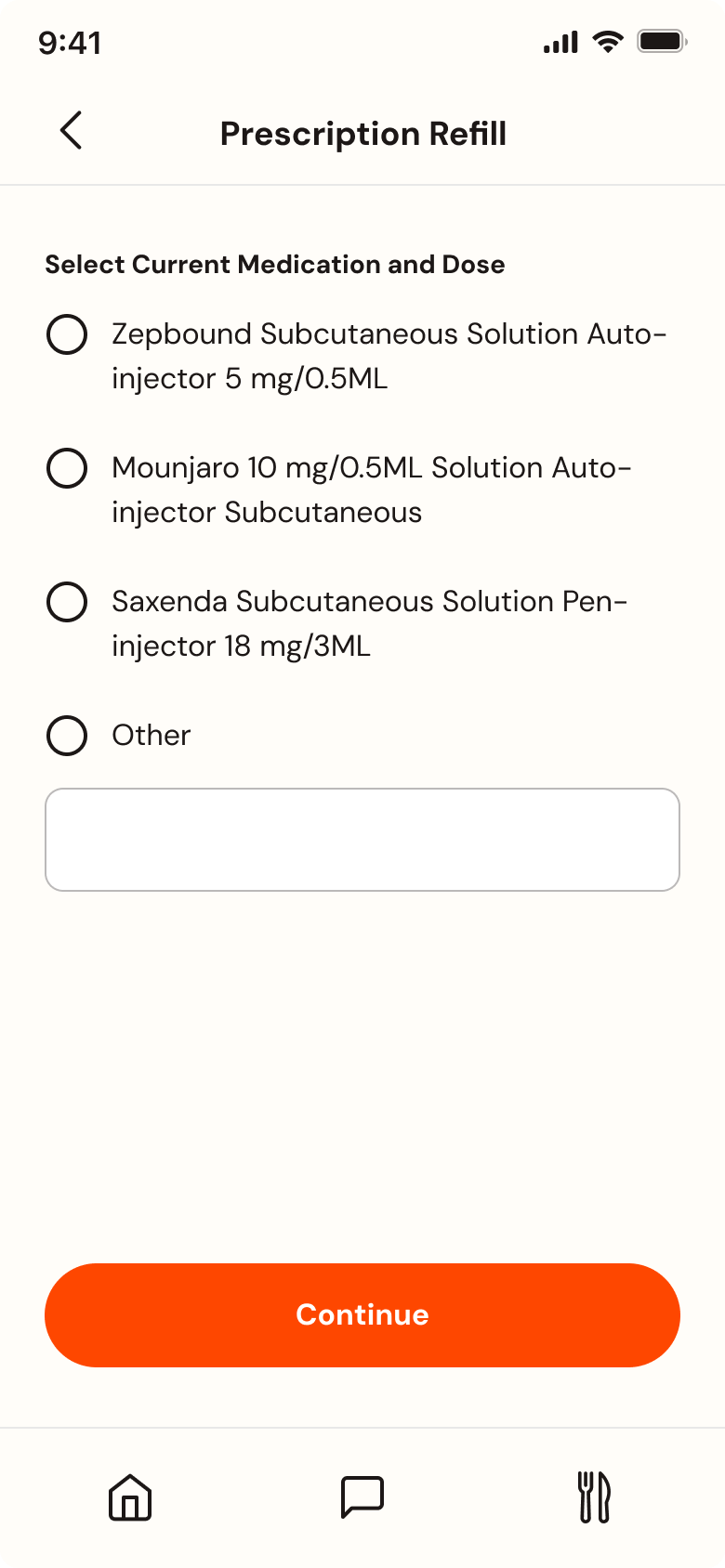
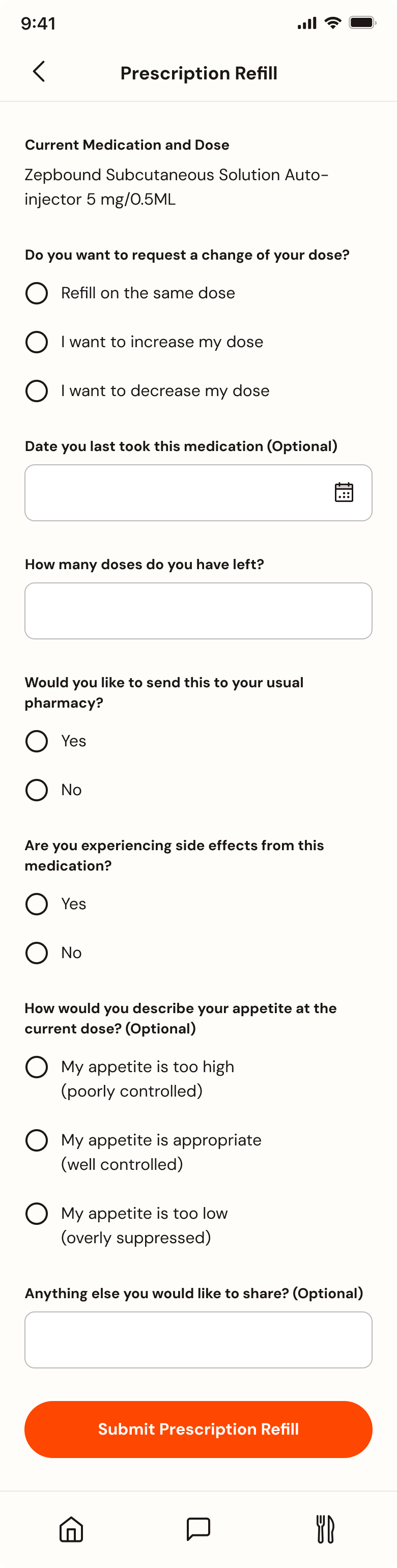
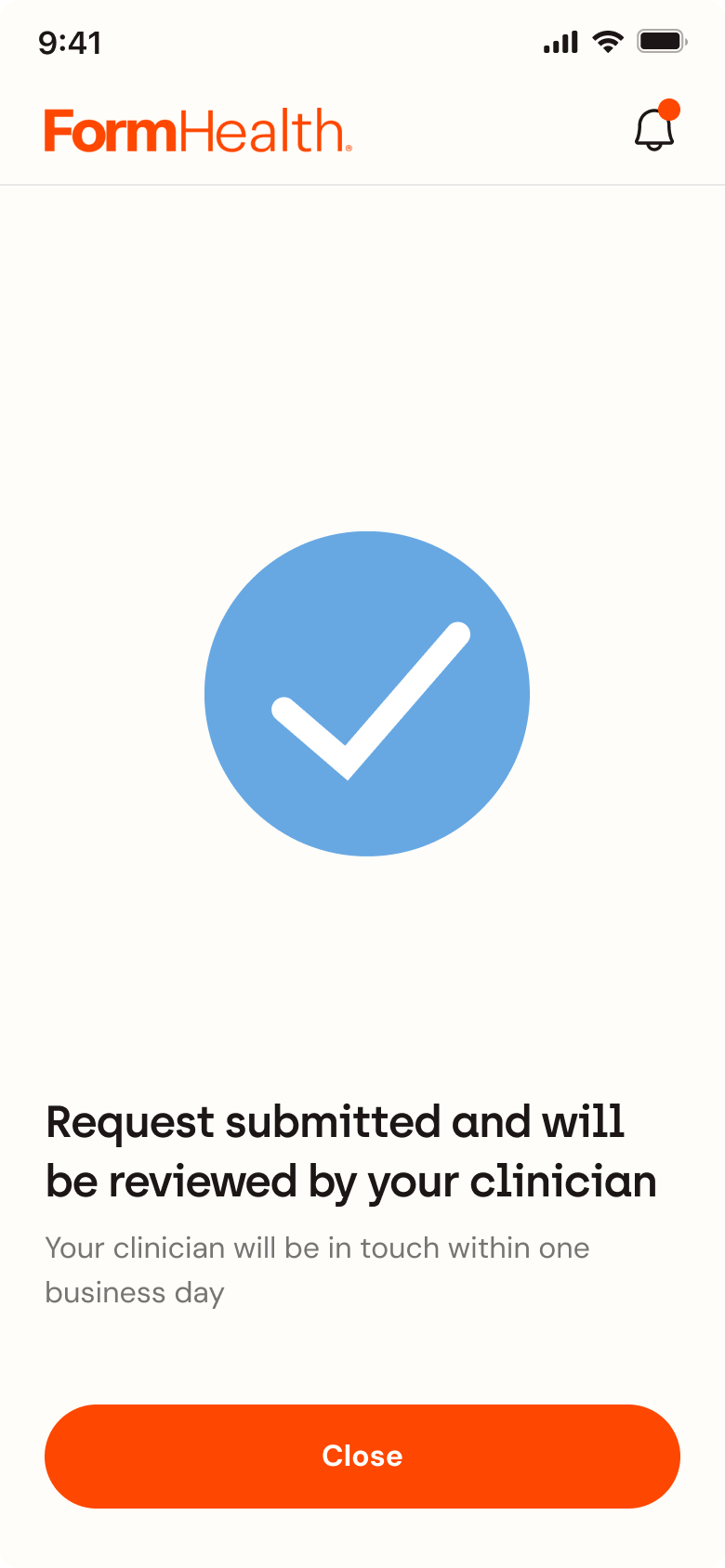
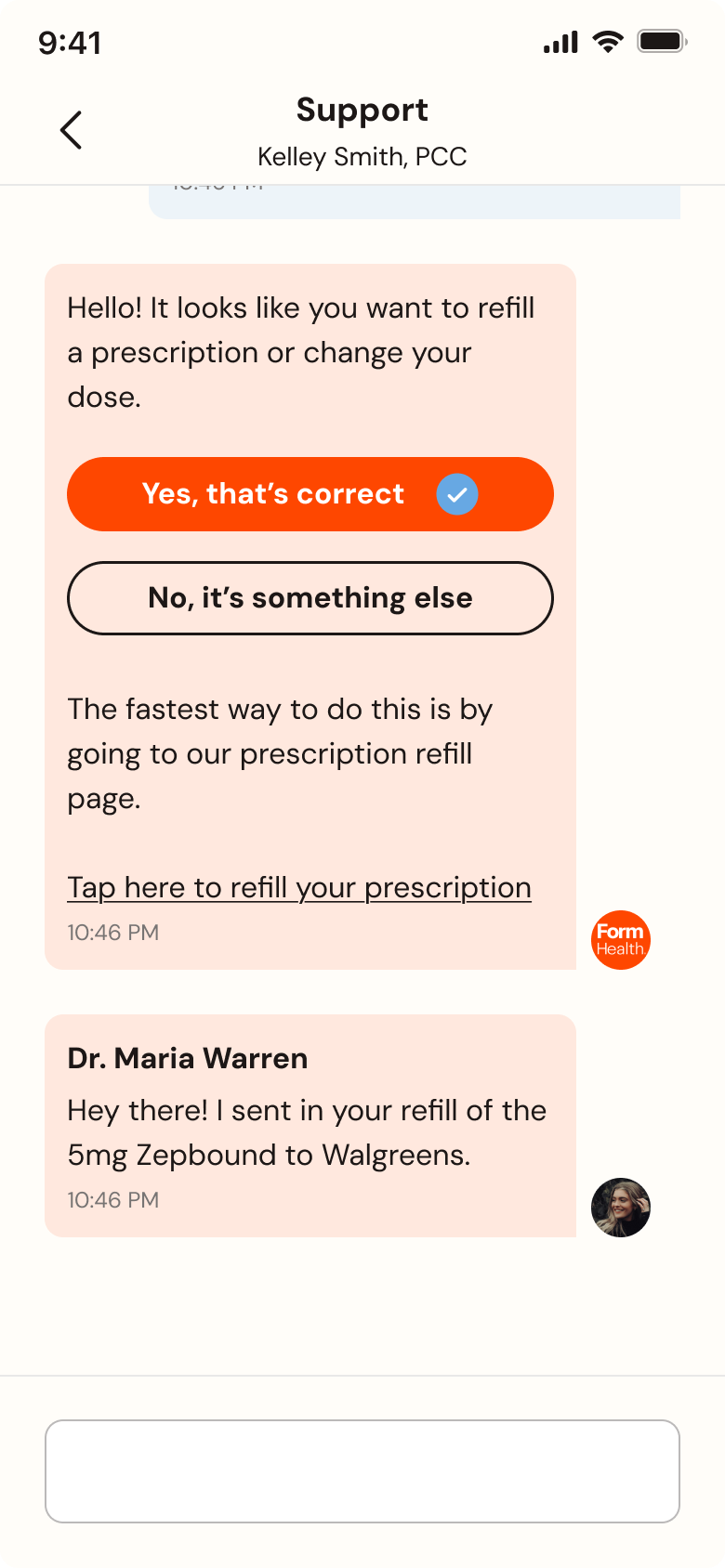
Unhappy Path
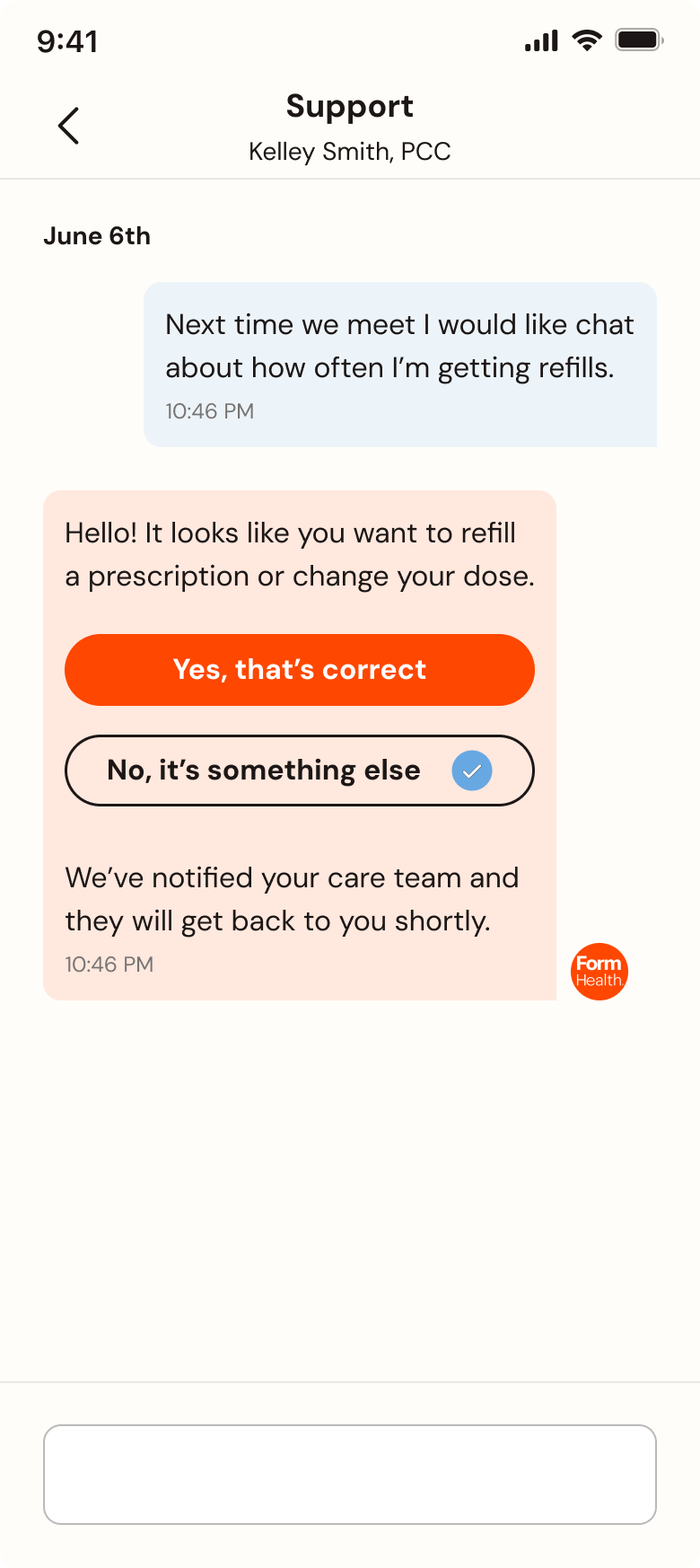
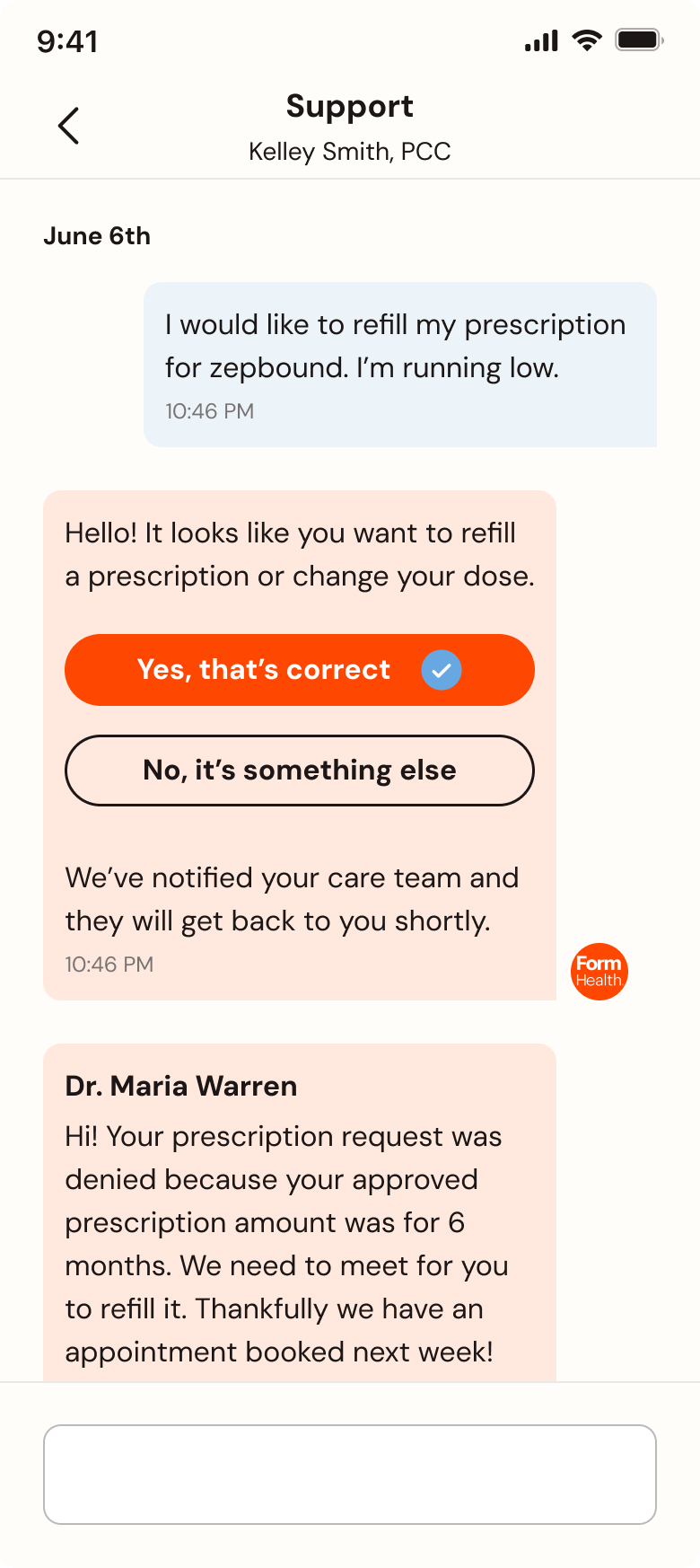
We conducted 10 user interviews through zoom to validate these designs and see if they resonated with users. All users we interviewed were generally positive about the concept of using AI and automation to streamline the prescription refill process. They appreciated the potential for increased efficiency and convenience compared to the current manual process.

Design & User Experience
- Intuitive and Streamlined: Users generally found the refill form to be intuitive, straightforward, and easy to use. They appreciated that it captured the information clinicians would need.
- Efficiency: Users liked that the form streamlines the process by reducing back-and-forth communication with clinicians.

Clarity & User Expectation
- Dose Changes: A major concern raised by the first user was the need to explicitly state that the refill process includes dose changes. They felt the initial wording implied that it was only for the same dose. This highlights the importance of clear communication to avoid user confusion and frustration.
- "No, it's something else" option: Users wanted clarity on what happens when they select "No, it's something else." They wanted reassurance that they could still communicate with their care team. This was clarified when showing the next screen and users were reassured that there was no interruption in communication with their care team.

AI & Automation
- Positive Reception: Users were generally receptive to the use of AI to detect prescription refill requests. They understood the potential for AI to reduce repetitive tasks for clinicians.
- Accuracy Concerns: Users raised questions about the accuracy of AI detection, particularly in recognizing variations in language and abbreviations.

Workflow & Process
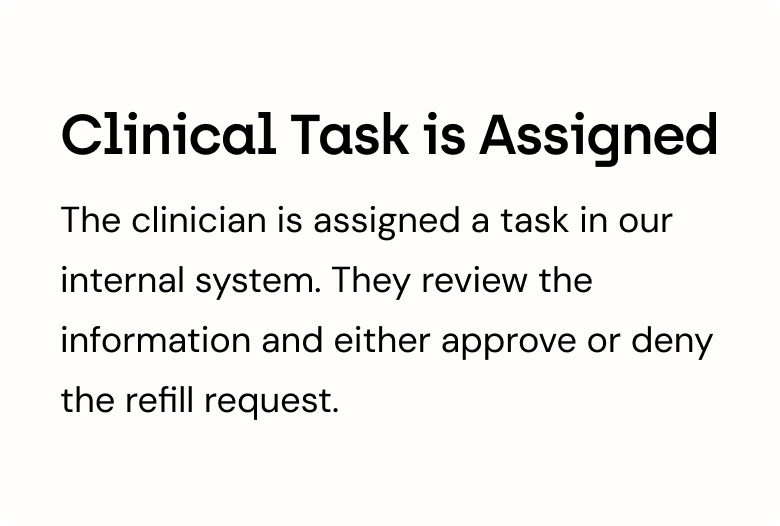
- Clinician Review: Users understood and appreciated that the refill request would still be reviewed by a clinician before being sent to the pharmacy.
- Integration with Existing Chat: Users liked that the new refill process wouldn't disrupt their ability to communicate with their care team through the chat feature.
In summary, the user interviews provided valuable feedback for refining the design and implementation of the AI-powered prescription refill process. The findings highlight the importance of clear communication, user-centered design, and addressing potential edge cases to create a positive and efficient user experience.
Following the completion of user testing, I partnered closely with our engineering team and worked with them through the full development and launch cycle. Our shared goal was to empower our clinicians by leveraging AI to handle 20% of routine administrative messaging. After three months in production, we were able to hit 18%. While just shy of our initial target, we consider it a success and are very happy with the results.
Beyond the data, this project has been a great win for our team’s growth. We’re now much more proficient and confident in designing within the AI space. We’re incredibly excited to carry this momentum and these key insights into our next round of AI-driven initiatives.

